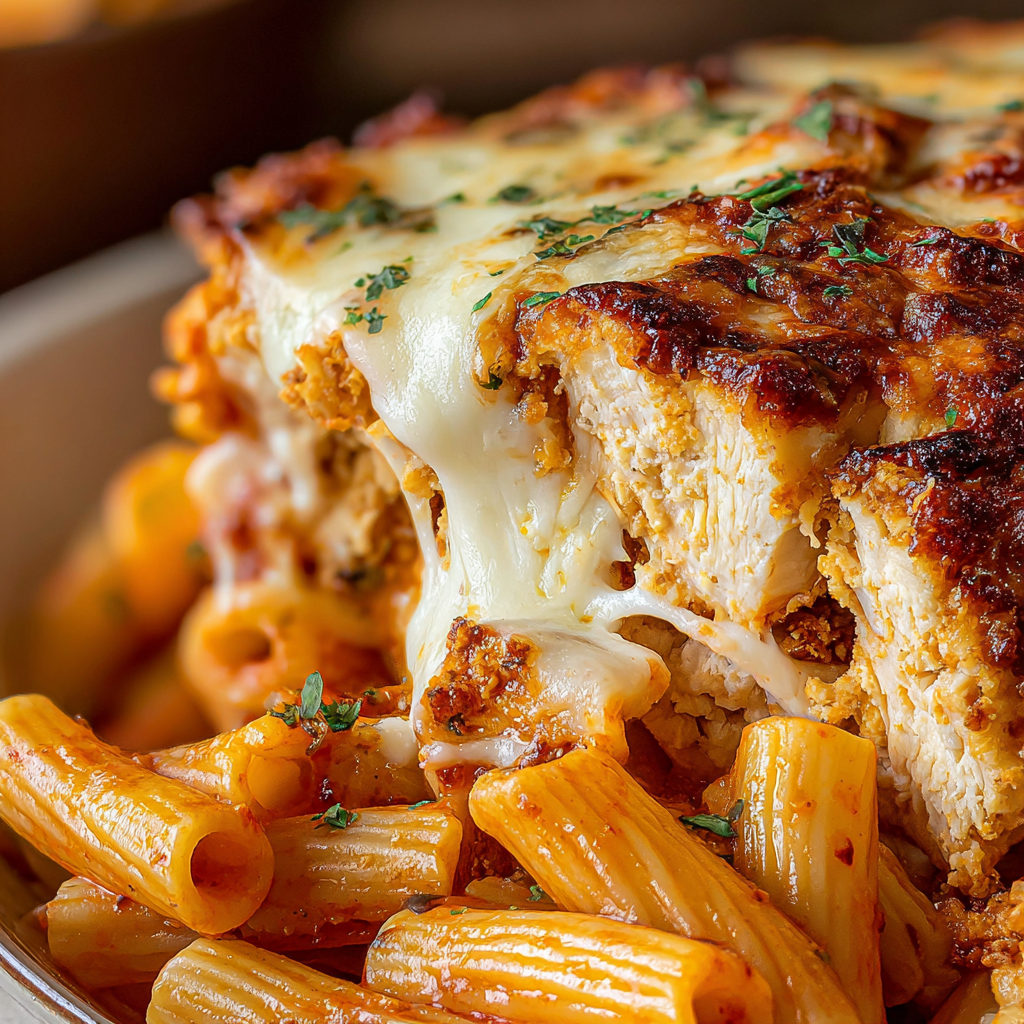
IntroductionChicken Parmesan Pasta
combines two comfort food classics into one delicious dish that is sure to please any palate. The melding of tender chicken, rich marinara, and cheesy goodness offers a satisfying meal that’s easy to prepare.
This dish showcases how versatile pasta can be, making it an ideal choice for weeknight dinners or family gatherings. Not only is it comforting, but it also delivers on flavor and heartiness, ensuring everyone at the table will leave satisfied.
Ingredients
- 8 oz penne pasta
Penne pasta is ideal for this dish as its tubular shape allows it to hold onto the sauce and flavors, ensuring every bite is delicious. You could also use rigatoni or fettuccine as alternatives. - 2 boneless, skinless chicken breasts (about 1 lb)
The chicken provides the main protein source and absorbs flavors beautifully, especially when seasoned and cooked properly. Its juicy texture complements the pasta and sauce perfectly. - 1 cup marinara sauce
Marinara sauce acts as the flavorful base for the dish, bringing a rich tomato flavor that ties all components together. A good quality sauce can elevate the entire recipe. - 1 cup shredded mozzarella cheese
Mozzarella cheese, when melted, adds creaminess and richness. It is the shining component that gives chicken Parmesan its characteristic gooey texture that is loved by many. - 1/2 cup grated Parmesan cheese
Parmesan cheese contributes a sharp, nutty flavor that enhances the overall taste profile of the dish. It’s also essential for sprinkling on top for added flavor. - 1/2 cup all-purpose flour
The flour is used for coating the chicken, creating a crispy outer layer when pan-fried, which contrasts nicely with the tender chicken inside. This step also helps the cheese to adhere better. - 2 large eggs
Eggs help bind the flour to the chicken, ensuring an even coating that crisps up during cooking. They also contribute to the overall richness of the dish. - 1 tbsp Italian seasoning
Italian seasoning, a blend of herbs like oregano and basil, enhances the flavor of the chicken and marinara sauce, giving the dish a classic Italian flair. - Salt and pepper to taste
Seasoning is key for bringing out the flavors of all the ingredients. A bit of salt and pepper allows each component to shine through. - 2 tbsp olive oil
Olive oil is used for cooking the chicken, providing the necessary fat for frying, and infusing the dish with a beautiful flavor. It also helps achieve a golden-brown crust.
Directions & Preparation
Step 1: Cook the pasta according to package instructions until al dente.
Cooking the pasta first ensures it reaches the perfect texture before being combined with the other ingredients. Under-cooking it slightly is important because it will continue cooking when mixed with the sauce, preventing it from becoming mushy.
Step 2: Prepare the chicken by slicing it in half horizontally to create thinner cutlets.
Slicing the chicken breasts ensures they cook evenly and quickly, reducing the risk of dry meat. Thinner cutlets also allow the flavors of the seasoning to penetrate more thoroughly.
Step 3: Season the chicken with salt, pepper, and Italian seasoning on both sides.
Seasoning the chicken is crucial for building flavor from the inside out. The combination of salt, pepper, and herbs creates a savory foundation that complements the marinara and cheese.
Step 4: Dredge each chicken cutlet in flour, followed by the beaten eggs, and then in breadcrumbs if desired.
Dredging the chicken creates a protective coating that locks in moisture. The flour helps create a crisp crust while the eggs and optional breadcrumbs enhance the texture with added crunch.
Step 5: Heat olive oil in a large skillet over medium heat, then add the chicken cutlets.
Cooking the chicken in a hot pan ensures a nice sear that lock in juices and flavors. It’s important not to overcrowd the skillet, as this can lower the pan’s temperature and cause steaming instead of frying.
Step 6: Cook the chicken for about 4-5 minutes on each side until golden brown and fully cooked.
Cooking until golden brown not only adds flavor through caramelization but also indicates that the meat is cooked through. Using a meat thermometer can help, with the safe internal temperature being 165°F.
Step 7: Once cooked, remove chicken from the skillet and let it rest on a cutting board.
Letting the chicken rest allows the juices to redistribute within the meat, ensuring it remains moist and tender when sliced. This is a vital step that can often be overlooked.
Step 8: In the same skillet, add marinara sauce and heat until simmering, then add the cooked pasta.
Using the same skillet not only saves dishes but also incorporates any leftover bits from the chicken, enhancing the sauce’s flavor. Adding pasta directly into the sauce allows it to absorb flavors.
Step 9: Slice the rested chicken and arrange it on top of the pasta and sauce mixture.
Arranging sliced chicken on top provides an appealing presentation and ensures even distribution of flavors throughout the dish. It’s a step that enhances both taste and visual appeal.
Step 10: Sprinkle mozzarella and Parmesan cheeses over the top and cover until cheese melts.
Covering the skillet allows the cheese to melt evenly without drying out, creating that desirable gooey texture. This also helps meld the flavors of the pasta, chicken, and sauce together.
Step 11: Once the cheese is melted, serve warm with additional cheese and fresh herbs if desired.
Serving with extra cheese and herbs takes the dish to another level, offering additional flavor and freshness. It’s these finishing touches that can make the meal feel special.

Flavor Variation: Pesto Chicken Parmesan
For a twist on the classic Chicken Parmesan Pasta, consider adding pesto to the mix. Incorporating basil pesto into the marinara sauce can elevate the dish with a fresh herbal note. Simply swirl a tablespoon or two of pesto into the sauce before combining with the pasta, and enjoy a new flavor profile that complements the cheesy goodness.
Pasta Shapes: Choosing the Right Option
While penne is a fantastic choice, feel free to experiment with different pasta shapes to match your texture preferences. Rigatoni offers larger tubes that catch more sauce, while spaghetti provides a classic appeal with its long strands. Each shape brings a unique mouthfeel, so get creative and choose one that excites your palate.
Garnishing for a Beautiful Finish
Presentation can elevate even the simplest dishes. After serving your Chicken Parmesan Pasta, a sprinkle of fresh parsley or basil can add a pop of color and freshness. A light drizzle of balsamic glaze can also provide a sweet contrast and enhance the visual appeal, making it as delightful to the eyes as it is to the taste buds.
FAQs
What can I use if I don’t have marinara sauce?
If marinara sauce isn’t available, you can substitute it with store-bought spaghetti sauce or homemade tomato sauce. Just ensure it’s seasoned well to match the flavor profile needed for the dish.
My sauce turned out too thick; how can I fix it?
If the sauce is too thick, add a splash of chicken broth or water to loosen it. Stirring it in gradually can help achieve the desired consistency without overwhelming the flavors.
Can I add vegetables to this dish?
Absolutely! Bell peppers, spinach, or mushrooms can be sautéed and added for extra nutrition and flavor. Just ensure to adjust cooking times if necessary to keep everything from becoming mushy.
How can I make the chicken less greasy?
To reduce greasiness, consider baking the chicken instead of frying. Simply coat it and place it on a baking sheet lined with parchment paper, baking at 400°F for about 20-25 minutes until cooked through.
What should I do if the chicken is overcooked?
If your chicken comes out tough, try serving it sliced over the pasta with additional sauce to help balance the texture. A rich sauce can mask a bit of the dryness.
Can I substitute the cheeses with a non-dairy option?
Yes, you can use dairy-free cheese alternatives available in stores today. Look for meltable varieties that can contribute a similar creamy texture to the dish.
Conclusion
Chicken Parmesan Pasta is not only a dish that brings comfort but also an excellent way to gather family and friends around the table. Its balance of flavors and textures ensures that each bite is satisfying and delightful.
With some creativity in the kitchen, it can be customized to suit your tastes, and it’s sure to become a go-to recipe in your collection. Enjoy this fulfilling meal and the happy moments it creates!
Recipe Card
Delightful Chicken Parmesan Pasta Experience
Ingredients
- 8 oz penne pasta
- 2 boneless skinless chicken breasts (about 1 lb)
- 1 cup marinara sauce
- 1 cup shredded mozzarella cheese
- 1/2 cup grated Parmesan cheese
- 1/2 cup all-purpose flour
- 2 large eggs
- 1 tbsp Italian seasoning
- Salt and pepper to taste
- 2 tbsp olive oil
Instructions
- Cook the pasta according to package instructions until al dente.
- Prepare the chicken by slicing it in half horizontally to create thinner cutlets.
- Season the chicken with salt, pepper, and Italian seasoning on both sides.
- Dredge each chicken cutlet in flour, followed by the beaten eggs, and then in breadcrumbs if desired.
- Heat olive oil in a large skillet over medium heat, then add the chicken cutlets.
- Cook the chicken for about 4-5 minutes on each side until golden brown and fully cooked.
- Once cooked, remove chicken from the skillet and let it rest on a cutting board.
- In the same skillet, add marinara sauce and heat until simmering, then add the cooked pasta.
- Slice the rested chicken and arrange it on top of the pasta and sauce mixture.
- Sprinkle mozzarella and Parmesan cheeses over the top and cover until cheese melts.
- Once the cheese is melted, serve warm with additional cheese and fresh herbs if desired.
Notes
Additional serving suggestions: pair with a crisp salad, garlic bread, or roasted seasonal vegetables for balance.
For make-ahead, prep components separately and assemble just before heating to preserve texture.
Taste and adjust with acid (lemon/vinegar) and salt right at the end to wake up flavors.